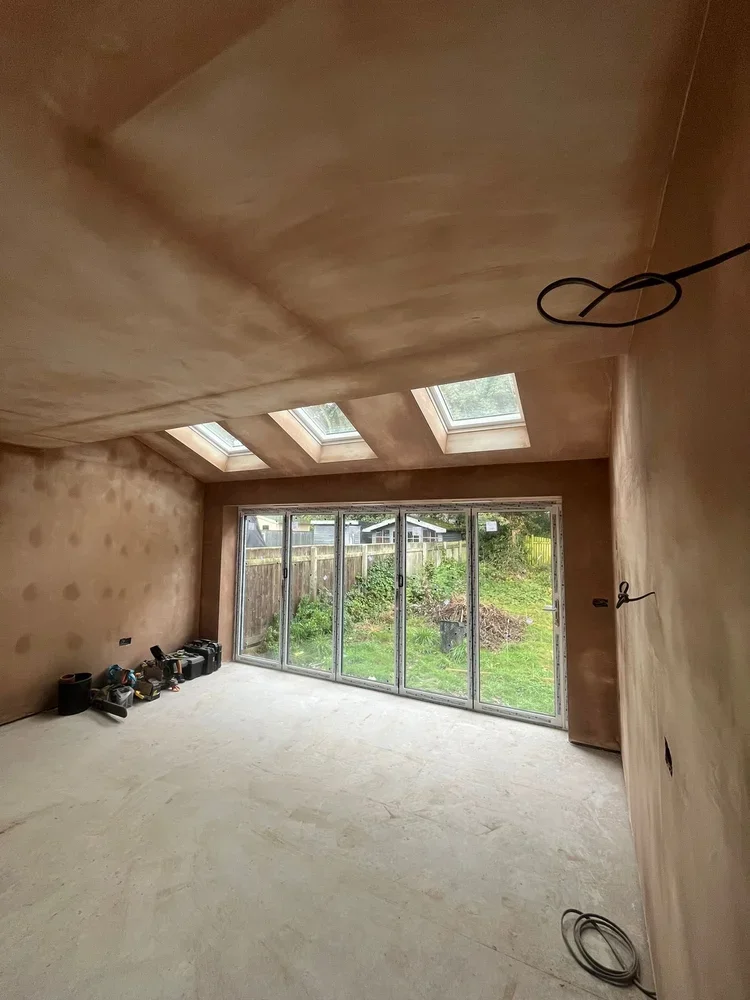
Your Roof Structure Matters
Not all roofs are suitable for both types of conversion. When we come to assess your loft, we'll look at the existing structure and let you know what's realistic.
If you've got a modern truss roof (common in houses built from the 1960s onwards), the timber trusses criss-cross throughout the loft space. These usually need to be replaced with a more open structure to create usable space, which adds cost regardless of whether you go for Velux or dormer.
Older properties often have traditional cut roofs with fewer obstructions, which can make conversions slightly more straightforward.
The height and pitch of your roof also matter. If you've got good headroom already, a Velux conversion might work well. If your roof is quite low or shallow, you might need a dormer to create adequate ceiling height.
What About Planning Permission?
Most Velux loft conversions don't need planning permission because they fall under permitted development rights. You're not changing the roofline or the external appearance of your house significantly.
Rear dormers often fall under permitted development too, as long as they don't extend beyond certain size limits and don't face a road. But front dormers, side dormers, or large rear dormers might need permission.
If you live in a conservation area, a listed building, or a flat, the rules are stricter, and you'll likely need planning permission for any loft conversion.
We handle all of this for you. We'll check what permissions are needed and sort out the applications. But it's worth knowing that if planning permission is required, it adds time to your project – typically a couple of months for the application process.
The Cost Difference
Let's talk numbers, roughly speaking. A basic Velux loft conversion for a typical Hull terrace might start from around £25,000-£35,000. A dormer conversion on the same property could be £35,000-£50,000 or more, depending on the size and specification.
These are ballpark figures – your actual costs depend on the size of your loft, what you want to include, the condition of your existing structure, and the finishes you choose. But there's usually at least a £10,000 difference between a Velux and a dormer conversion, sometimes more.
If the budget is tight, a Velux conversion might be your only realistic option. But if you can stretch to a dormer and you need the extra space, it's often worth the investment.
Natural Light and Views
Here's something people don't always consider: the type of windows affects not just light but also your view.
Velux windows let in loads of light because they're angled towards the sky. They're brilliant for brightness. But your view is mostly sky and rooftops. Depending on where you live, that might be lovely or fairly uninspiring.
Dormer windows are vertical, which means you get a more normal view out – you can see your garden, neighbouring properties, and the street. For some people, this feels more natural and pleasant.
If you're converting a loft into a bedroom where you'll be spending time relaxing, think about what you'd prefer to look at.
Building Regulations Apply to Both
Whichever option you choose, you need to comply with building regulations. This covers structural safety, fire safety, insulation, sound insulation, stairs, and ventilation.
Your staircase needs to be a proper fixed staircase with the right dimensions – no pull-down ladders. You need fire doors and escape windows. The insulation needs to meet current standards. If you're adding a bathroom, the plumbing needs to be done properly.
We handle all the building regulations side of things, including inspections at various stages. It's a legal requirement, and it's there to make sure your loft conversion is safe and built to proper standards.
Which One Should You Choose?
Here's how we usually guide our clients through this decision:
Choose a Velux conversion if you've got decent existing headroom, you're working with a tighter budget, you want the quickest build time, and you're happy with a slightly more compact space with sloping ceilings.
Choose a dormer conversion if you need maximum usable space, you want full headroom throughout most of the room, you're planning to include an en-suite bathroom, or your existing roof doesn't have much headroom.
But honestly? The best way to decide is to have us come and look at your actual loft. Every property is different, and what works brilliantly for one Hull home might not suit another.
Getting It Right for Your Home
We've done both types of loft conversion many times across Hull, from Victorian terraces in the Avenues to semi-detached houses in Cottingham. We know what works in different types of properties and what the common challenges are.
When we visit your home, we'll measure up your loft, assess the structure, and give you honest advice about which option would work best. If your loft is perfect for a Velux conversion and that would save you £15,000, we'll tell you. If we think you really need a dormer to create a space that's actually comfortable and usable, we'll explain why.
Our job is to help you make the right decision for your home and your budget, not just to sell you the most expensive option.
Ready to explore your loft conversion options? Give us a call on 07934 237607 or email dbconstructionhull@outlook.com. We'll come and assess your loft, talk through both options with you, and give you a free, no-obligation quote. Let's turn that unused loft space into a room you'll actually love.